


A CBN survey has concluded that credit to the economy declined by N900 billion or 2.27 % in August.
This finding was disclosed by Vanguard, and it revealed that credit to the domestic economy (Net Domestic Credit, NDC) fell by 2.27% from N39.57 trillion in July to N38.67 trillion in August 2020.

On the reason for the decline, the report stated that it was due to N730 billion or a 10.21% decline in credit to the government, which fell to N8.55 trillion in August from N9.52 trillion in July. The contraction in credit to the government was driven by a sharp fall in government borrowing through treasury bills (TBs), as total TBs held by investors dropped by N510 billion or 14.7%, from N3.48 trillion in July to N2.97 trillion in August.
The report further showed that credit to the private sector remains unchanged at N30.13 trillion as at the end of August, slightly higher by 0.24% when compared with the N30.06 trillion in July.
(READ MORE: How foreign exchange risks and others affect the Nigerian pension industry)
 By Clever Advertising

What this means
The flow of credit is paramount to the growth and sustainable development of any nation. Therefore, the current credit crunch might be as a result of a shortage of funds, an extension of an impending recession, or perceived fear of bankruptcies or defaults due to the impact of the pandemic.
Backstory
Recall that Nairametrics had earlier reported on how N3.3 trillion was injected into the Nigerian economy through loans by Nigerian banks.

MACRO-ECONOMIC NEWS
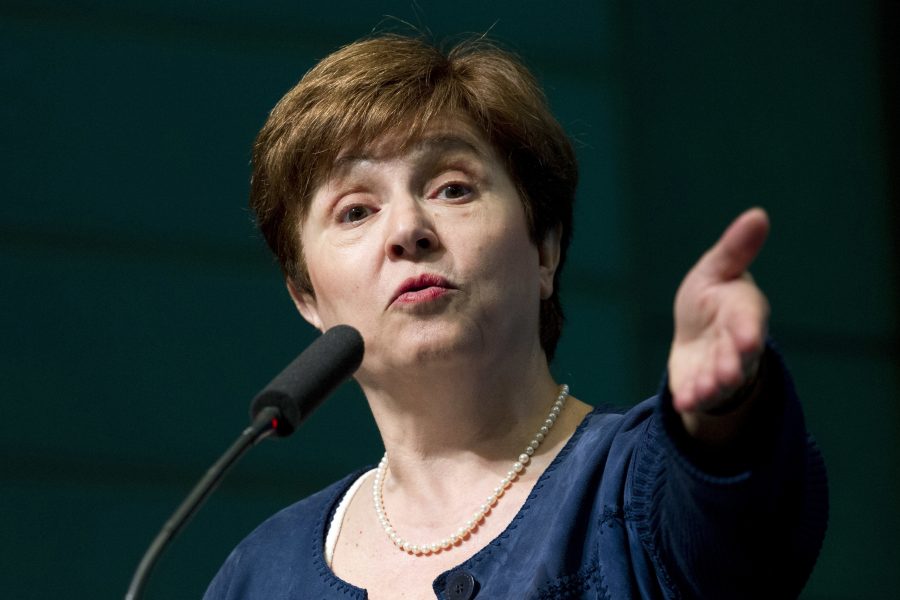
IMF: Global economy is now projected to fall by 4.4%
The world economy is now projected to fall by 4.4% in 2020.

Published
17 hours agoon
October 13, 2020The International Monetary Fund on Tuesday revised the global economy’s growth slightly upward for the year 2020 but warned of “long and unstable roadblocks to full economic recovery.”
The world economy is now projected to fall by 4.4% in 2020, an upward guide from an earlier predicted rate of -4.9% made in June. The IMF’s projection anticipates that social distancing due to the COVID-19 pandemic will continue into 2021, but the transmission of the virus will plunge globally by the end of 2022.
“We are projecting a somewhat less severe though still deep recession in 2020, relative to our June forecast,” the IMF’s Chief Economist, Gita Gopinath, said in the latest World Economic Outlook.
She added that the revision was driven by better-than-expected growth in advanced economies and China during the second quarter of the year and signs of a more rapid recovery in the third quarter.
Backstory
Recall Nairametrics released an IMF report about a week ago, which shows against headwinds that the world economy has ended up performing better than the IMF had envisaged in Q2 and Q3.
- This is expected to lead to an upward revision, its growth forecasts which are scheduled to be released next week
- The report went on, “We have reached this point, largely because of extraordinary policy measures that put a floor under the world economy.”
- Governments have provided around $12 trillion in fiscal support to households and firms.
- Unprecedented monetary policy actions have maintained the flow of credit, helping millions of firms to stay in business.
Emerging market and developing economies are having to manage this crisis with fewer resources, as many are constrained by elevated debt and higher borrowing costs.
- These economies will need to prioritize critical spending for health and transfers to the poor and ensure maximum efficiency.
- They will also need continued support in the form of international grants and concessional financing, and debt relief in some cases. Where debt is unsustainable, it should be restructured sooner than later to free up finances to deal with this crisis.
MACRO-ECONOMIC NEWS
IMF: Global economy not performing badly as anticipated
The world economy has ended up performing better than the International Monetary Fund had envisaged in Q2 and Q3.
Published
1 week agoon
October 6, 2020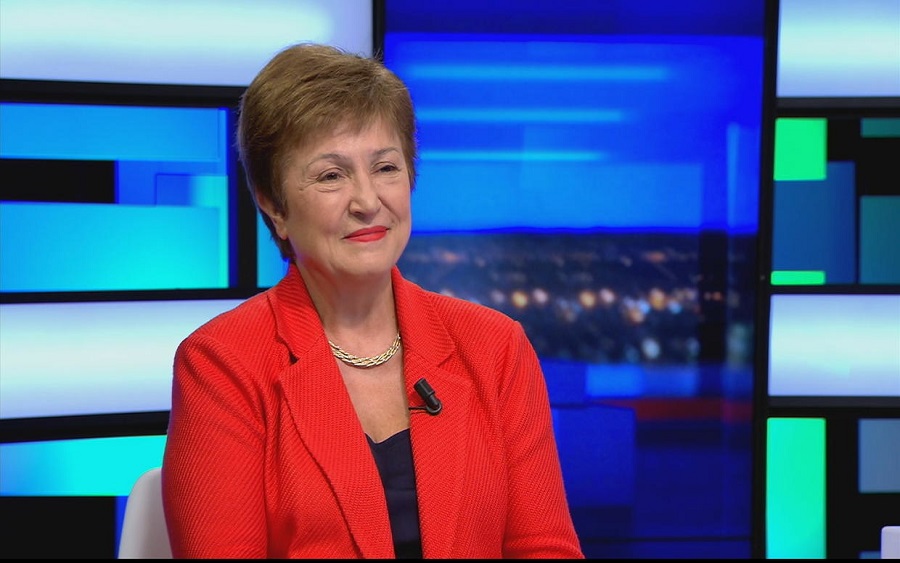
“The economic crisis of 2020 may have performed so badly as anticipated earlier by many experts but road bumps still lie ahead said,” Kristalina Georgieva, the International Monetary Fund’s managing director said on Tuesday.
The IMF had earlier anticipated in June that the global economy will contract by 4.9% in 2020.
READ: FG ready for OPEC talks, as brent crude risk plunging to single digit low
Against headwinds, the world economy has ended up performing better than the International Monetary Fund had envisaged in Q2 and Q3. This is expected to lead to an upward revision to its growth forecasts which are scheduled to be released next week
The report went on, saying; We have reached this point, largely because of extraordinary policy measures that put a floor under the world economy. Governments have provided around $12 trillion in fiscal support to households and firms. And unprecedented monetary policy actions have maintained the flow of credit, helping millions of firms to stay in business.
READ: IMF considering an “emergency” bailout for Nigeria
But some were able to do more than others. For advanced economies, it is whatever it takes. Poorer nations strive for whatever is possible. This gap in response capacity is one reason why we see differentiated outcomes. Another reason is the effectiveness of measures to contain the pandemic and restart economic activities.
For many advanced economies, including the United States and the Euro Area, the downturn remains extremely painful, but it’s less severe than expected. China is experiencing a faster-than-expected recovery. Others are still hurting badly, and some of our revisions are on the downside.
READ: Recession: Nigerian economy to slide by 3.4% in 2020 – IMF
However, the IMF boss pointed on the prevailing high risks bearing on the global economy from rising bankruptcies and stretched valuations in financial markets, coupled with many leading nations having their debt levels exponentially high because of their fiscal response to the COVID-19 crisis and the fiscal revenue losses recorded.
The report continued, stating; “As we embark on this ‘ascent,’ we are all joined by a single rope—and we are only as strong as the weakest climbers. They will need help on the way up. The path ahead is clouded with extraordinary uncertainty. Faster progress on health measures, such as vaccines and therapies, could speed up the ‘ascent’.
READ: CBN finally alters rate, Cuts MPR to 13.50%
But it could also get worse, especially if there is a significant increase in severe outbreaks. Risks remain high, including from rising bankruptcies and stretched valuations in financial markets.
And many countries have become more vulnerable. Their debt levels have increased because of their fiscal response to the crisis and the heavy output and revenue losses. We estimate that global public debt will reach a record-high of about 100 percent of GDP in 2020.”

MACRO-ECONOMIC NEWS
IGR: States generate N612.9 billion in H1 2020, dips by 11.7%
The IGR generated by the 36 states including the FCT in the first half of the year, dipped by 11.7%.

Published
1 week agoon
October 6, 2020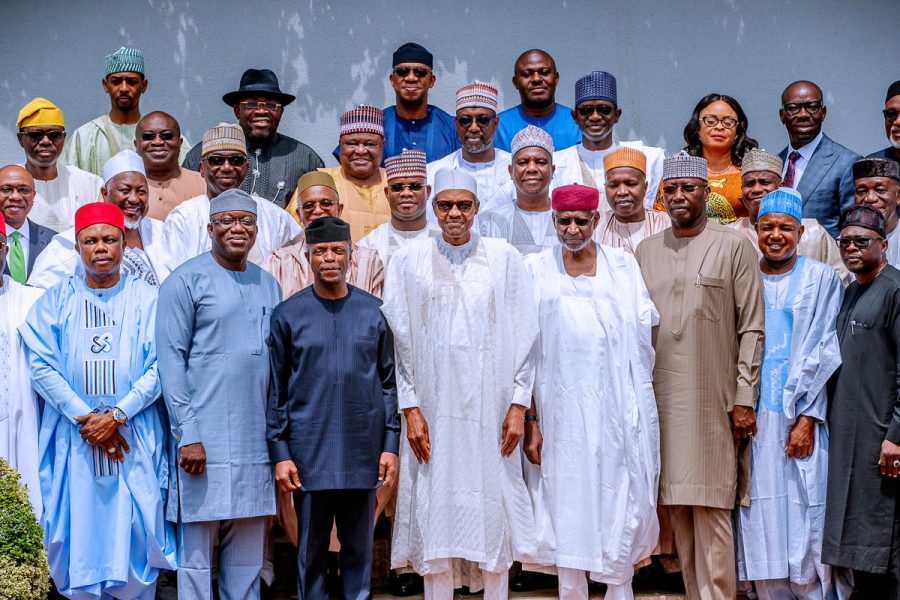
States in Nigeria including the Federal Capital Territory (FCT) generated a sum of N612.87 billion as Internally Generated Revenue (IGR) between January and June 2020. This was disclosed in the States IGR report, recently released by the National Bureau of Statistics (NBS).
According to the report, the IGR collected by the 36 states including the FCT in the first half of the year, dipped by 11.7% compared to N693.9 billion recorded in the corresponding period of 2019.
Similarly, the Q2 2020 States and FCT IGR figure stood at N259.73 billion compared to N353.14bn recorded in the previous quarter. This indicates a decline of 26.5% quarter on quarter.
READ: Nigeria generates N876.09 billion VAT in 9-month, as revenue shortfall poses threat
Lagos, Rivers State rank highest in IGR
Lagos State recorded the highest Internally Generated Revenue with N204.51 billion, followed by Rivers State with N64.59 billion, while Jigawa State recorded the least at N3.01 billion.
- Lagos States dwarfed others to the top spot, with IGR of N204.51 billion between January and June 2020, accounting for 33.4% of the total states’ revenue during the period.
- Rivers State followed with a total revenue of N64.59 billion, representing 10.5% of total revenue generated by the States in the review period.
- Other states include; Abuja with N35.21 billion, Delta State (N30.84 billion), Ogun (N23.68 billion), Oyo (N17.77 billion), Kano (N17.51 billion), Akwa Ibom (N16.21 billion), Kaduna (N14.55 billion) and Edo State (N14.01 billion).
- On the flip side, Jigawa State generated the least IGR with N3.01 billion, followed by Ekiti State (N3.21 billion), Adamawa (N3.75 billion), Gombe (N3.79 billion) and Yobe (N3.92 billion).
READ: Lagos projects increase in IGR despite impressive performance

States revenues dampened by COVID-19
The latest figure is a clear reflection of the effect of the COVID-19 pandemic, which necessitated the imposition of movement restrictions across the country and halt in economic activities. As a result, the States recorded decline in revenue in the review period.
The decline in revenue has caused most of the 36 states of the federation to rely majorly on Federal allocations to meet up with their government expenditures. According to the report; 34 out of the 37 states rely more on monthly allocations from the federal purse, with the exemption of only Lagos, Abuja, and Ogun State.
It is therefore important for the various state governments, to brace up and device means of generating revenue internally, considering the effects of dwindling oil price on federal revenue.




#EndSARS: Despite scrapping SARS, why are Nigerians still protesting?

CITITRUST Holdings Plc launches Investment/Asset Management Company in Malawi

Publicly traded companies own 601,000 Bitcoins, gain $500 million

#EndSARS: Nigerians, Startups fast adopting Bitcoin

Naira weakens at black market as external reserves loses $42 million in 1 week



Post a Comment